← Go Back


Have you ever looked at someone and thought, "There's no way they're actually 50"? Or met someone your own age who seems decades older? We instinctively sense that the number of birthdays someone has celebrated doesn't always match how their body is actually aging.
What if you could measure that difference? What if there was a biological test that could tell you whether your cells are aging faster or slower than the calendar suggests?
That's exactly what DNA methylation clocks do. These sophisticated molecular tools read chemical patterns across your genome to calculate your true biological age. In short, this reveals whether you're aging gracefully at the cellular level or whether your body is wearing down faster than it should. More importantly, they're showing us that biological aging isn't predetermined. The choices you make every day are written into your DNA in ways that either accelerate or slow how your cells age.
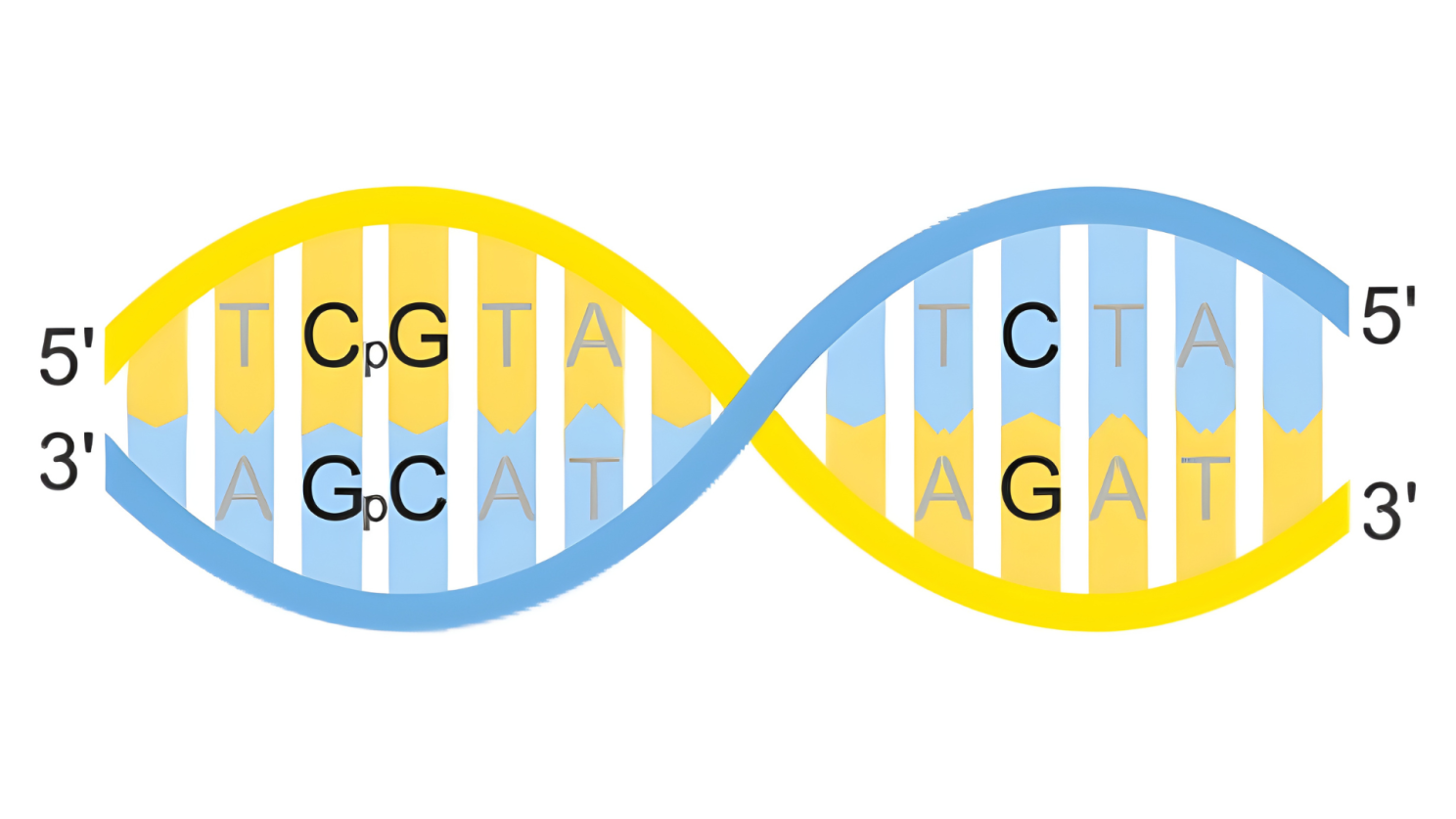
To understand these clocks, we first need to grasp what DNA methylation is. Your DNA sequence (the genetic code you inherited from your parents) doesn't change throughout your life. But chemical modifications to that DNA (called methylation) do change and these changes influence which genes are turned on or off without altering the underlying genetic code itself. Methylation mainly occurs at CpG dinucleotides—sites where a cytosine nucleotide is followed by a guanine—and often suppresses gene activity when located in gene promoter regions.
This process happens constantly throughout your body. As you age, methyl groups get added to or removed from specific locations in your genome in remarkably consistent patterns. Certain spots consistently gain methylation as you get older, while other spots consistently lose it.
DNA methylation clocks work by measuring these age-related changes. Researchers identified specific sites in your DNA (called CpG sites) where methylation changes most predictably with age. By measuring methylation levels at hundreds of these sites and feeding that data into mathematical models, they can calculate your biological age with impressive accuracy. When your methylation pattern matches someone typically 45 years old, your biological age reads as 45, regardless of whether you're actually 40 or 50 chronologically.
What makes these clocks particularly valuable is that they don't just tell you how long you've been alive. They reveal whether your cellular aging process is running faster, slower, or on pace compared to other people born the same year as you.
Not all methylation clocks measure the same thing. Three major clocks have emerged, each offering different insights into biological aging:
The Horvath Clock (2013)
Developed by Dr. Steve Horvath at UCLA, this was the first multi-tissue clock capable of estimating age across different cell and tissue types. The Horvath clock examines methylation patterns at 353 specific CpG sites and calculates what's called "DNAm age" (DNA methylation age).
What makes this clock remarkable is its consistency. Whether analyzing blood, brain tissue, liver, or muscle, the Horvath clock produces reliable age estimates. This suggests it's measuring something fundamental about cellular aging that operates similarly across your entire body.
The Hannum Clock (2013)
Published the same year as Horvath's work, Gregory Hannum's clock takes a different approach. It measures 71 CpG sites specifically in blood cells and was designed to predict chronological age with high accuracy.
While the Hannum clock correlates strongly with actual age, it also appears sensitive to factors affecting blood cell composition and immune system aging. This makes it potentially useful for assessing immune system health alongside biological age.
PhenoAge (2018)
The most recent of the three major clocks, PhenoAge was developed by Morgan Levine and Steve Horvath to do something different: predict health outcomes rather than just chronological age. This clock integrates methylation data from 513 CpG sites with clinical biomarkers (such as C-reactive protein, glucose, and white blood cell counts) to estimate "phenotypic age," essentially measuring how old your body appears from a functional health perspective and modeling disease risk and mortality beyond chronological aging.
PhenoAge has shown stronger associations with mortality risk, physical functioning, and disease incidence compared to earlier clocks. When your PhenoAge is significantly higher than your chronological age, it suggests accelerated biological aging that may increase health risks. Conversely, having a PhenoAge younger than your actual age correlates with better health outcomes and potentially increased longevity.
Here's where things get interesting and personally relevant. Two people born on the same day can have dramatically different biological ages measured by these clocks. Research has identified several factors that appear to accelerate or slow the ticking of your methylation clock:
Chronic Stress and Trauma
Studies of individuals experiencing prolonged psychological stress, including caregivers, survivors of childhood trauma, and those with post-traumatic stress disorder have shown accelerated epigenetic aging. Their methylation clocks run faster than their chronological age would predict. The biological mechanism likely involves sustained elevation of stress hormones and inflammatory markers that affect how genes are expressed throughout the body.
Physical Activity
Multiple studies have found associations between regular exercise and slower epigenetic aging. People who maintain consistent physical activity tend to have younger biological ages according to methylation clocks. Interestingly, the relationship isn't always linear (more isn't always better). Moderate, consistent activity appears beneficial, while extreme exercise without adequate recovery might not provide the same epigenetic benefits.
Sleep Quality and Duration
Sleep disruption and chronic sleep deprivation have been linked to accelerated epigenetic aging. During sleep, your body performs crucial maintenance and repair processes. Poor sleep quality or insufficient sleep duration appears to interfere with these processes at the molecular level.
Nutritional Factors
Diet quality shows clear associations with methylation age. Diets rich in antioxidants, omega-3 fatty acids, and whole foods correlate with younger biological ages. Whereas, diets high in processed foods, excess sugar, and pro-inflammatory ingredients associate with accelerated epigenetic aging.
The mechanisms likely involve how different nutrients affect cellular processes like inflammation, oxidative stress, and the availability of methyl donor compounds (like folate, B12, and choline, which are nutrients that provide the methyl groups needed for DNA methylation) that directly participate in DNA methylation itself. This connection is partly due to one-carbon metabolism, the biochemical pathway that supplies methyl groups essential for DNA methylation.
Environmental Exposures
Factors including air pollution, smoking, and exposure to certain chemicals have been associated with faster epigenetic aging. Your methylation clock essentially integrates these environmental impacts over time, creating a biological record of your exposures and how they've affected your cellular aging process.

Studies have shown that having a biological age significantly older than your chronological age associates with increased risk of cardiovascular disease, neurodegenerative conditions, metabolic disorders, and decreased physical functioning. Conversely, people whose methylation clocks indicate a younger biological age tend to maintain better health and cognitive abilities as they age.
This isn't just about longevity. It's about healthspan, which can be described as the period of life spent in good health rather than managing chronic disease. Your methylation age may provide insights into whether your current lifestyle is supporting extended healthspan or potentially shortening it.
While we're still in early stages of understanding what interventions reliably affect methylation age, research has been promising.
The reality? The interventions that show the most consistent associations with younger biological age are fundamentally the same practices known to support overall health: regular physical activity, quality sleep, stress management, nutritious whole-food diets, and avoiding harmful exposures like smoking.
DNA methylation clocks don't reveal secret shortcuts to anti-aging. They provide measurable confirmation that the lifestyle factors we already know matter for health are indeed working at the cellular level.
Testing Your Own Biological Age
These tools are still research-grade and best interpreted alongside medical and lifestyle data under professional guidance.
Several commercial companies now offer biological age testing based on DNA methylation analysis. These tests typically require a blood sample or cheek swab and return an estimated biological age.
What they can't tell you: These tests can't predict with certainty how long you'll live or whether you'll develop specific diseases. Biological age is one piece of the health puzzle, working alongside genetics, medical history, and many other factors.
If you test and discover your biological age is older than your chronological age, don't panic. Focus on the evidence-based practices for supporting health: quality sleep, stress management, regular exercise, and whole-food nutrition.
DNA methylation clocks work best when considered alongside other health indicators like inflammatory markers, metabolic health indicators (such as blood glucose, insulin sensitivity, and lipid profiles), and cardiovascular fitness measures (like VO2 max, resting heart rate, and blood pressure). Think of biological age as one important gauge on your health dashboard, not the only one that matters.
Your Cellular Story
DNA methylation clocks offer something remarkable: a measurable window into your biological aging process. Rather than representing a rigid destiny, your biological age reflects the cumulative effects of your choices and circumstances. The exciting implication is that many factors influencing epigenetic aging are modifiable and have the ability to make a difference.
Whether or not you choose to test your biological age, understanding how these clocks work deepens appreciation for how intimately connected your daily choices are to your cellular health. Your biological age isn't just a number but a dynamic reflection of how well you're supporting your body's capacity for maintenance and repair. And unlike your chronological age, your biological age remains responsive to how you live your life!


More Info: At WellPro, we're developing an AI-native end-to-end clinical platform for personalized, preventative, and data-driven care designed to help clinicians deliver scalable, high-touch, and proactive care that truly empowers the patient.
The assistant is still loading. Try again in a moment, or email hello@wellpro.ai.