← Go Back


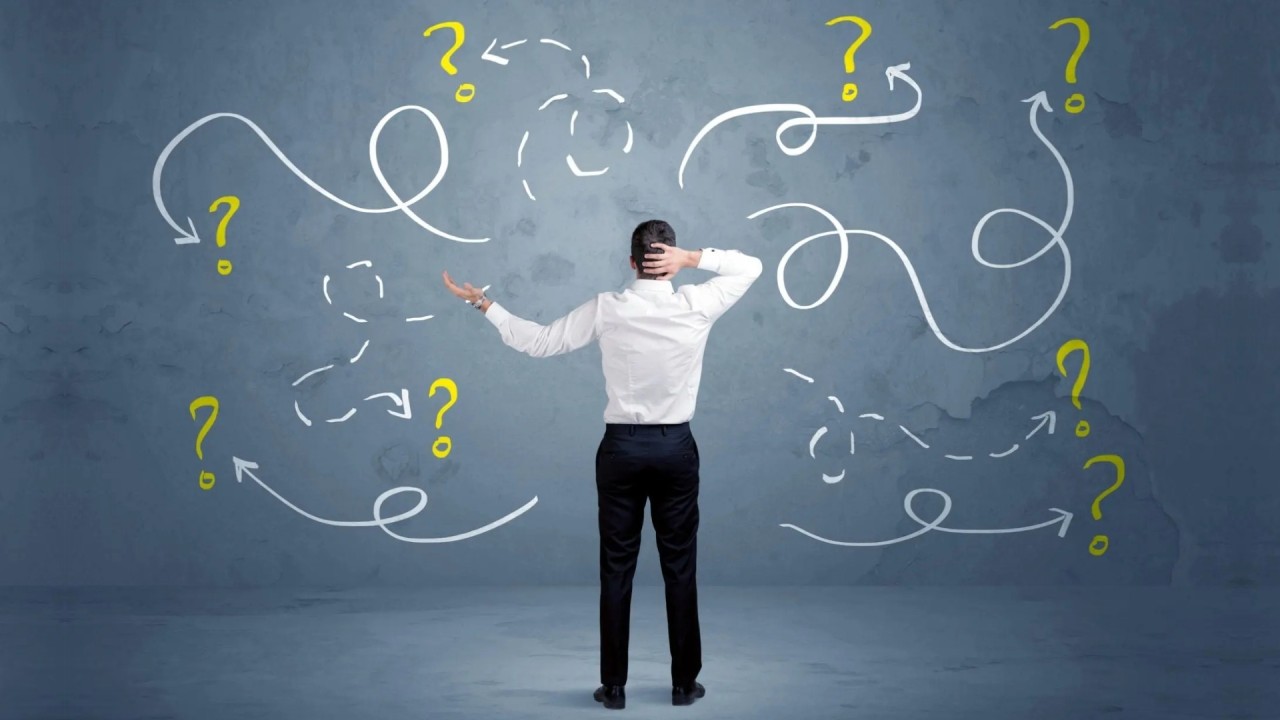
The average adult makes roughly 35,000 decisions every single day. Some are small and nearly invisible, like what to wear or which message to answer first. Others carry more weight, like how to respond to a challenging email, what to prioritize at work, or how to navigate a hard conversation. And a few are genuinely big, the kind that shape your health, your career, or your relationships. What's interesting is that your brain may not neatly separate the trivial from the important. Even small decisions can add to your overall mental load, especially when they pile up without much space to reset. As that load builds over the course of a day, the quality of your choices can quietly decline. You start defaulting to the easy option, leaning on mental shortcuts, or avoiding decisions altogether.
What Decision Fatigue Actually Is
Decision fatigue refers to the decline in the quality of your decisions after a long period of decision-making. The core idea is simple: deciding well takes mental effort, and like most forms of effort, it seems to have limits. Make enough choices in a row, and your capacity to keep making good ones appears to wear down.
Importantly, this is thought to be different from being physically tired or even mentally fatigued in a general sense. It's specifically about the act of choosing. Weighing options, considering trade-offs, and committing to a path all take a kind of mental energy, and decision fatigue is what happens when that particular form of energy runs low.
When it sets in, it tends to show up in a few characteristic ways. Some people become impulsive, making hasty choices just to be done with them. Others swing the opposite direction into decision avoidance, putting choices off entirely or defaulting to whatever requires no thought at all. In both cases, the common thread is the same: you're no longer deciding at your best.
The Cost of Making Too Many Decisions
Some of the most striking evidence for decision fatigue has come from people whose job is to make serious decisions over and over again.
In one widely discussed study, researchers looked at how experts ruled on a long series of high-stakes cases throughout the workday. The pattern was hard to ignore. Early in a session, favorable rulings were more common. As the session went on and case after case piled up, those favorable outcomes became less likely. Then, after a break to eat and rest, the rate of favorable rulings rose again before beginning to decline once more.
In other words, the timing of a decision appeared to matter more than it should have. Even among trained professionals, judgment seemed to shift over the course of repeated decision-making.
That does not mean the study explains everything. Other factors, including how cases were scheduled, may have also played a role. But it remains a useful illustration of a larger point: decision quality is not shaped only by the facts in front of us. It can also be influenced by timing, fatigue, breaks, and how many choices have already come before.
What the Science Does and Doesn't Say
This is also a topic where it helps to separate what's well established from what isn't, because the popular version of decision fatigue is often presented as more settled than it really is.
A very common explanation you'll hear is that willpower runs on a kind of fuel tank that gets depleted with each decision you make, until eventually it runs low. This "limited resource" model, sometimes called ego depletion, dominated popular psychology for years. But when researchers ran large, rigorous studies to test it, the effect turned out to be weaker and less consistent than the original research suggested. In some of the most careful experiments, it barely showed up at all.
So what's left? Quite a lot, actually. The experience people describe as decision fatigue is familiar and widely reported. What's debated is the exact mechanism behind it. It may have less to do with a draining fuel tank and more to do with general mental fatigue, declining motivation to keep exerting effort, mood, and the simple fact that sustained focus is hard to maintain.
Why It Matters in Everyday Life
You don't have to be making high-stakes rulings for this to affect you. Decision fatigue shows up quietly across ordinary life.
It's why you might make thoughtful, healthy food choices early in the day and then reach for whatever's easiest by evening. It's why shopping can feel genuinely exhausting after you've compared enough options. It's why the end of a demanding workday is often the worst time to make an important call, and why you might snap at someone or abandon a goal not because you stopped caring, but because your capacity to self-regulate was worn down.
Understanding this reframes a lot of moments we tend to chalk up to personal failure. That evening lapse in discipline may not be a character flaw. It may simply be the predictable result of a brain that has been making choices all day. That reframe alone can be freeing, and it points toward practical ways to work around it.
How to Protect Your Decisions
The good news is that decision fatigue is highly manageable once you know it exists. The strategies aren't about forcing more willpower. They're about designing your life so you lean on it less.

Work With Your Brain, Not Against It
The most useful takeaway from decision fatigue is simple and empowering: the quality of your decisions is influenced by more than just the facts in front of you. Timing, mental energy, and how many choices you've already made all play a role.
Once you see that, you can build around it. You can protect your most important decisions by making them when you're fresh, eliminate the trivial choices that quietly drain you, and build routines that let you spend your mental energy where it counts. In a world that floods us with more choices than ever, learning to manage that load may be one of the most practical skills there is, not just for making better decisions, but for preserving the energy to live your best life!

Want to Learn More? Check Out:
The assistant is still loading. Try again in a moment, or email hello@wellpro.ai.