← Go Back


Few hormones influence as much of daily life as estrogen and progesterone, and few are as widely misunderstood. Beyond their well-known role in reproduction, they act as powerful regulators of mood, metabolism, body composition, bone density, and brain function. They rise and fall across the menstrual cycle and shift dramatically during pregnancy. Then, during the transition to menopause, they change for good. Each of these shifts can produce real, felt effects on how a person thinks, feels, and functions. What makes this worth understanding is that so much of it can be influenced by the choices you make. Many of the fundamentals that support healthy hormonal function are well within reach. And while this is largely a women's health story, one of these hormones plays a surprising and essential role in men's health too.
What These Two Hormones Actually Do
Estrogen and progesterone are often described as the two main female sex hormones, produced mainly in the ovaries. But that description undersells how broadly they act. Both are steroid hormones, which means they travel through the bloodstream and interact with receptors found all over the body, not just in reproductive tissue. This is exactly why their influence reaches so far.
Estrogen is the more wide-ranging of the two. Beyond reproduction, it influences bone density, fat metabolism, blood vessel health, and important aspects of brain function like mood and memory. It helps explain why estrogen's decline touches so many systems at once.
Progesterone works closely alongside estrogen, often balancing or complementing its effects. It plays a central role in the menstrual cycle and pregnancy, but it also has calming, sleep-supporting properties in the brain, in part through byproducts it forms when metabolized. So when people describe feeling different at various points in their cycle, the shifting levels of these two hormones are often part of the reason.
The Monthly Rhythm and Its Effects
For much of a woman's life, estrogen and progesterone follow a roughly monthly rhythm, rising and falling in a coordinated pattern that governs the menstrual cycle. Estrogen tends to climb in the first half of the cycle, while progesterone rises in the second half after ovulation. Both then fall if pregnancy doesn't occur, triggering menstruation.
These aren't just reproductive signals. Because both hormones act on the brain, their rise and fall can influence mood, energy, sleep, appetite, and mental sharpness throughout the month. For many people the effects are subtle, but for some they are significant. Premenstrual mood changes, including the more severe premenstrual dysphoric disorder, are a good example. These are thought to happen not because the hormones themselves are abnormal, but because some brains are simply more sensitive to their normal rise and fall. The hormone levels are typical. The response to them is what differs from person to person.
Mood, the Brain, and Hormonal Transitions
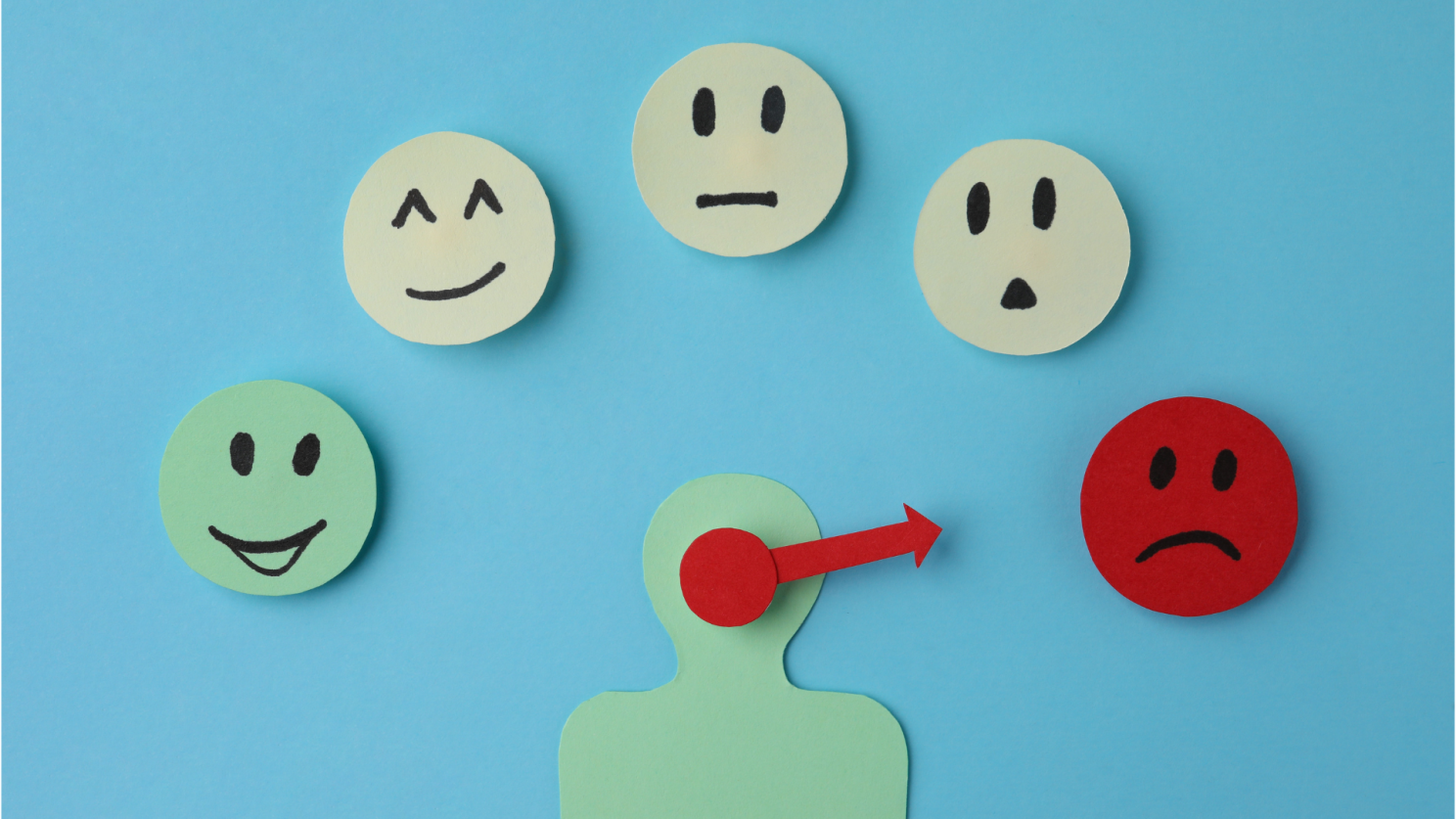
One of the most important and overlooked facts about estrogen and progesterone is how deeply they affect the brain. They act as neuroregulators, influencing the same systems involved in mood, stress, and emotional regulation.
This helps explain why certain life stages carry a higher risk of mood changes. The times of greatest hormonal fluctuation, the premenstrual phase, the postpartum period, and the transition to menopause, are also when some women are most vulnerable to depression and anxiety. Research suggests this vulnerability isn't universal. Instead, it seems that certain people are more sensitive to the effects of these hormonal shifts, which is why two people can go through the same transition with very different emotional experiences.
Understanding this changes how we see a lot of suffering that often gets dismissed or blamed on something else. Mood changes tied to hormonal transitions are not a matter of weakness or imagination.
Metabolism, Body Composition, and Aging
Estrogen has a significant influence on metabolism and body composition, and this becomes especially clear during the menopause transition. As estrogen declines, several changes tend to follow.
Research following women through the menopause transition has found that the rate of fat gain roughly doubles during this period, while lean muscle mass declines, and these shifts happen to a meaningful degree independent of normal aging. Body fat also tends to redistribute, shifting toward the abdomen in a pattern more associated with metabolic risk. Estrogen's decline is also linked to changes in insulin sensitivity and cholesterol, which is part of why cardiovascular and metabolic risk tends to rise after menopause.
None of this means weight gain or metabolic change is inevitable or unmanageable. But it does mean the same habits a woman relied on earlier in life may not produce the same results during and after this transition, and that shifting your strategy, especially toward preserving muscle, is often the smart move. Understanding the biology makes these changes feel less mysterious and less like a personal failing.
Bone Health
One of estrogen's most important and least talked-about roles is in maintaining bone. Estrogen helps regulate the constant remodeling process in which old bone is broken down and new bone is formed. When estrogen falls at menopause, bone breakdown can begin to outpace bone formation, leading to a period of accelerated bone loss.
This is why the years around menopause are so important for long-term bone health, and why bone density becomes a growing concern with age. It's also a big reason that weight-bearing and resistance exercise, which stimulate bone maintenance, become more and more valuable over time.

Yes, This Matters for Men Too
Although estrogen is thought of as a female hormone, men produce it as well, largely by converting testosterone into estrogen through an enzyme called aromatase. And that estrogen isn't just along for the ride. It plays genuinely important roles in male health.
Research in healthy men has helped clarify this. When testosterone and estrogen are looked at separately, testosterone appears mainly responsible for maintaining muscle mass and strength, while estrogen appears mainly responsible for regulating body fat. Both contribute to sexual function. In other words, some of what has long been chalked up to testosterone alone actually depends on estrogen. Estrogen is also crucial for male bone health, so much so that it sometimes predicts men's bone density better than testosterone does.
Progesterone's role in men is smaller and less understood, but the broader point stands: these are not exclusively female hormones.
How to Support Healthy Hormonal Function
Now for the empowering part. While you can't micromanage these hormones, and while some situations do call for medical care, many of the fundamentals that support healthy hormonal function are firmly within your control. And they're the same foundations that support overall health.
Prioritize strength and weight-bearing exercise. This may be the single most valuable habit, especially with age. Resistance and weight-bearing exercise help preserve the muscle and bone that hormonal changes tend to erode, and exercise supports mood, metabolism, and insulin sensitivity at the same time.

Eat enough protein. Adequate protein becomes more and more important for preserving muscle, especially during and after the menopause transition when muscle is more vulnerable.
Support your gut and eat enough fiber. The gut plays a role in metabolizing and clearing hormones, and fiber supports both gut health and healthy hormone processing, along with steadier blood sugar.
Protect your sleep. Sleep and hormones influence each other in both directions. Poor sleep can worsen hormonal symptoms, and hormonal shifts can disrupt sleep, so protecting your sleep helps break that cycle.
Manage stress. The stress hormone cortisol interacts with sex hormones, and chronic stress can amplify hormonal symptoms. Practices that lower chronic stress can really help.
Be mindful of alcohol consumption. Alcohol can affect how estrogen is metabolized and can worsen sleep and mood, so moderation tends to support more stable hormonal health.
Know when to seek care. For significant symptoms, whether disruptive premenstrual mood changes, difficult menopausal symptoms, or concerns about bone or metabolic health, a knowledgeable clinician can help. Hormone therapy and other medical treatments are legitimate options worth discussing with a professional, and they're decisions best made individually rather than based on headlines.
Working With Your Hormones, Not Against Them
Maybe the most useful shift that comes from understanding estrogen and progesterone is realizing how much of what they influence is real, biological, and worth taking seriously, and how much of it responds to the choices you make.
So much of what these hormones affect, mood, weight, sleep, energy, strength, gets misread as personal failing or simply endured in silence. But these are powerful regulators acting throughout the body and brain, and their shifts have real effects. Understanding that is both validating and empowering, because it turns confusing experiences into something you can name, and often, something you can influence. You can't stop these hormones from changing over a lifetime, but you can absolutely support your body through every stage of the journey. That knowledge is a form of power, and it's available to you at any age!

The assistant is still loading. Try again in a moment, or email hello@wellpro.ai.