← Go Back


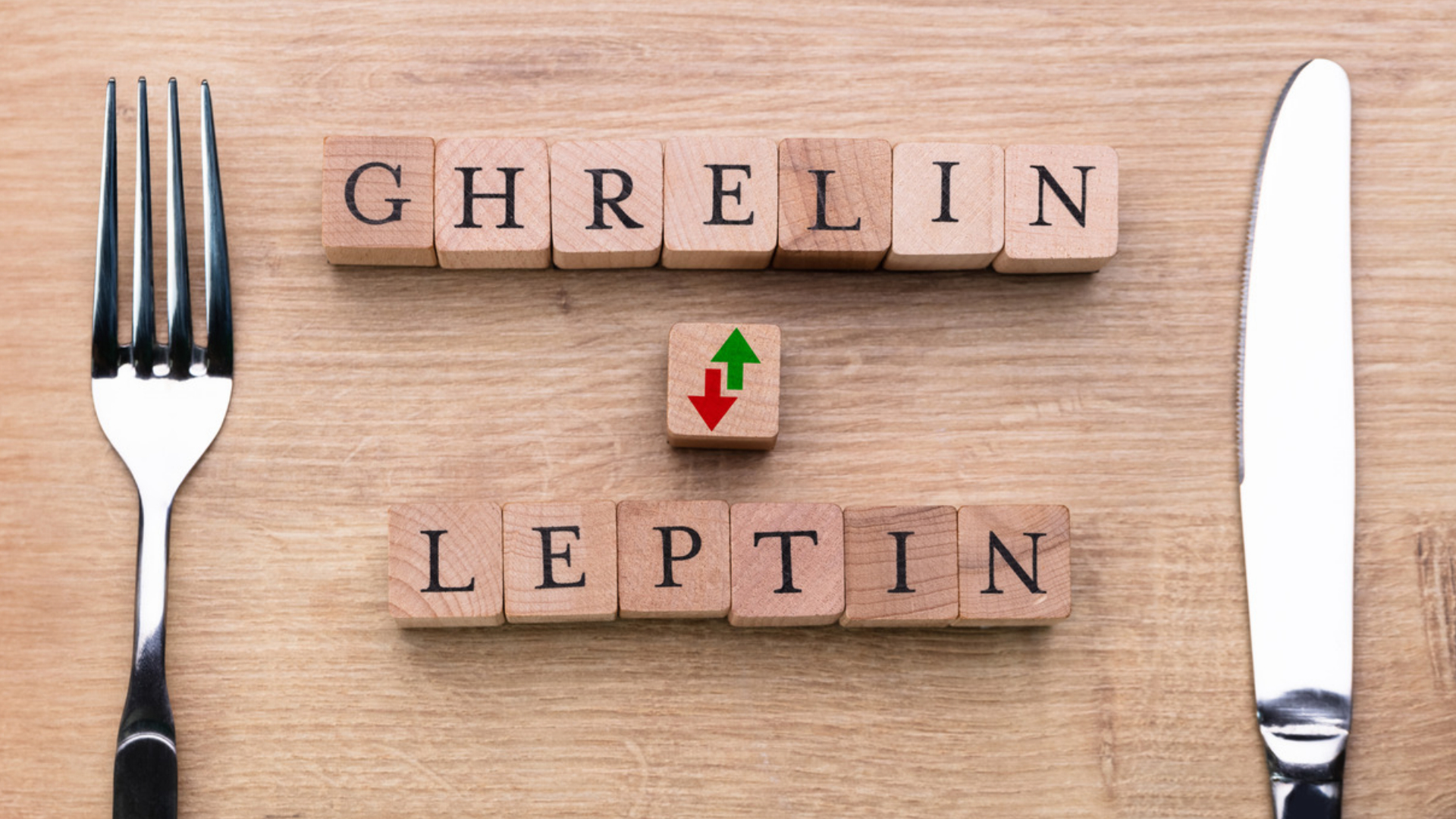
Your body has two hormones in a constant conversation about hunger, fullness, and energy. One is ghrelin, and it's often called the hunger hormone. It rises before meals, tells your brain it may be time to find food, and quiets down after you eat. The other is leptin, and it's more of a long-term energy signal. Released largely by your fat cells, it helps tell your brain how much stored energy you have available and whether appetite should be dialed up or down. When these signals are working well, hunger and fullness tend to feel more natural and appropriate. But this system can be thrown off by many different things like poor sleep, chronic dieting, stress, weight loss, and highly processed food. Understanding how leptin and ghrelin work helps explain some of the most frustrating experiences with hunger, cravings, and weight, and why the problem is so rarely a simple matter of willpower.
Your Two Hunger Hormones
Though they work as a pair, leptin and ghrelin are quite different, and understanding each one on its own makes the whole system easier to grasp.
Ghrelin is often called the hunger hormone. It's produced mainly in your stomach, and it works on a short timescale, meal to meal. Ghrelin levels rise when your stomach is empty, sending a signal to your brain that it's time to eat. This is the hormone behind that hollow, gnawing feeling before lunch. Once you've eaten and your stomach begins to fill, ghrelin drops, and the hunger fades. In this sense, ghrelin is your body's meal-timing signal.
Leptin plays a very different role. It's often called the satiety hormone, and it's produced by your fat cells. Rather than tracking individual meals, leptin reflects your longer-term energy stores. The more fat tissue you have, the more leptin you tend to produce. When leptin levels are adequate, they signal to your brain that you have enough energy on board, which helps suppress appetite and maintain your weight. Leptin is less about "it's time for lunch" and more about "we have enough energy in reserve."
Together, these two hormones give your brain a remarkably complete picture: ghrelin handles the short-term question of when to eat, and leptin handles the long-term question of how much energy you're carrying.
The Conversation Happening in Your Brain
Both hormones ultimately report to the same place: a region of the brain called the hypothalamus, which acts as a control center for appetite and energy balance. There, they influence specialized groups of neurons that either stimulate hunger or suppress it.
When this system is working well, it's elegant and self-correcting. Eat a meal, and ghrelin falls while fullness signals rise, so you naturally stop. Go too long without food, and ghrelin climbs until you're prompted to eat. Over longer stretches, leptin helps keep the whole system anchored to your actual energy reserves. In principle, this should keep appetite and weight in a comfortable, stable range without any conscious effort at all.
The interesting and frustrating part is how often modern life interferes with this otherwise elegant system.
When the Signals Get Disrupted
For something so finely tuned, the leptin-ghrelin system is surprisingly easy to throw off. Several everyday factors can distort the signals, and most people never connect them to their appetite.
Poor sleep. Sleep has a measurable effect on both hormones. Research has generally found that short sleep is associated with higher ghrelin and, in some studies, lower leptin, a combination that tends to increase hunger and appetite, often for calorie-dense, carbohydrate-rich foods. The effect isn't identical in every study, but the overall pattern is consistent enough that a run of bad nights can leave you genuinely hungrier and more prone to cravings, independent of your discipline.
Chronic dieting and weight loss. This is one of the most important and least understood parts of the system. When you lose a significant amount of weight, leptin falls (because you have less fat tissue), while ghrelin tends to rise. In other words, your body responds to weight loss by ramping up hunger and dialing down fullness. Notably, research has found that these hormonal changes can persist for a year or more after the weight is lost, which helps explain why keeping weight off is often harder than losing it in the first place. This isn't a failure of willpower. It's your body defending against what it interprets as a threat of starvation.
Highly processed foods. Diets heavy in ultra-processed, calorie-dense foods appear to weaken the normal fullness response, making it easier to override your body's signals and keep eating past the point of genuine need. Whole foods rich in protein and fiber tend to do the opposite, promoting a stronger and more lasting sense of fullness.

Chronic stress. Ongoing stress and elevated stress hormones can influence appetite and cravings, and for many people, stress tilts eating toward more, and toward less nourishing choices.
The Problem of Leptin Resistance
There's one more piece that explains a great deal about why appetite regulation can go wrong, and it's counterintuitive.
You might assume that people carrying more body fat, and therefore producing more leptin, would feel less hungry, since leptin suppresses appetite. But it often works the other way. In many people with excess weight, the brain becomes less responsive to leptin's signal, a state known as leptin resistance. The leptin is there, sometimes in high amounts, but the brain no longer "hears" it clearly. The result is that the fullness message doesn't get through, and appetite stays elevated despite ample energy stores.
Leptin resistance is a key reason appetite problems can become self-reinforcing, and it's part of why simply having more leptin doesn't translate into feeling more satisfied. It's also a major focus of ongoing research into weight and metabolism.
How to Support Healthy Hunger Signals
While you can't consciously control these hormones, you can influence the conditions that keep them working well. The strategies that help are, reassuringly, the same fundamentals that support overall health, and none of them involve willpower battles or extreme restriction.
Prioritize sleep. Given how strongly sleep affects these hormones, consistent, quality sleep is one of the most effective things you can do to keep hunger signals steady. Protecting your sleep may do more for your appetite than any specific food rule.
Eat enough protein and fiber. Both promote a stronger, longer-lasting sense of fullness and help blunt excessive hunger. Building meals around protein, vegetables, and fiber-rich whole foods works with your satiety signals rather than against them.
Favor whole foods over ultra-processed ones. Whole, minimally processed foods tend to support normal fullness signaling, while heavily processed foods make it easier to eat past the point of satisfaction.

Be cautious with extreme dieting. Because aggressive weight loss can push hunger hormones in the direction of regain, slower, more sustainable approaches tend to be easier to maintain over time. Crash diets often work against your own biology.
Manage stress. Since stress influences appetite and cravings, practices that lower chronic stress can indirectly support more balanced eating.
Move your body regularly. Physical activity supports healthy metabolism and appetite regulation, and tends to improve how well these signals function over time.
Working With Your Biology, Not Against It
Perhaps the most useful shift that comes from understanding leptin and ghrelin is this: hunger is not a character flaw, and appetite is not purely a matter of discipline. It's a biological system, shaped by hormones that respond to how you sleep, eat, move, and manage stress.
That reframing matters. So much of the conversation around hunger and weight centers on willpower, as if wanting to eat were simply a weakness to be overcome. But when you understand that poor sleep can raise your hunger hormone, that dieting can suppress your fullness hormone for an extended period of time, and that your brain can stop hearing leptin's signal altogether, it becomes clear that fighting your appetite head-on is often a losing battle.
The better approach is to work with these signals rather than against them. Sleep well, eat in a way that genuinely satisfies you, move your body, and be wary of extremes. Do that, and you're not overriding your hunger hormones through sheer effort. You're helping them do the job they were designed to do all along!

The assistant is still loading. Try again in a moment, or email hello@wellpro.ai.