← Go Back


Nearly a third of your life is spent sleeping… time that should serve as a way to leave you energized and pain-free each morning. Instead, too many people wake up with aching backs, stiff necks, and the disappointing realization that a full night of sleeping didn't deliver the restoration they needed. There are multiple factors at play here, but one that most people aren't considering is sleep position and how it might be negatively affecting their sleep quality. Research reveals that how you position your body during sleep can significantly impact everything from spinal health to brain detoxification. Yet, this critical factor remains largely overlooked in most discussions about sleep optimization.
Sleep posture affects your body through multiple interconnected systems. Unlike daytime postures where you can consciously adjust when something feels uncomfortable, sleep positions are maintained for hours without conscious control. This extended time in static positions creates sustained loads on your musculoskeletal system while potentially influencing circulation, breathing, and even neurological processes.
Your spine faces unique challenges during sleep. While upright during the day, your spine deals with gravitational compression and muscular tension. At night, reduced gravitational forces and muscle relaxation create an opportunity for recovery, but only if your sleeping position supports proper spinal alignment. Poor positioning can stress ligaments, compress nerves, and create asymmetrical loading that leads to morning stiffness and discomfort.
Research has also discovered that sleep posture may influence your brain's glymphatic system, which is the waste-clearing mechanism that removes metabolic byproducts during sleep. Studies suggest that side sleeping may enhance this critical detoxification process.
While there's no universal "best" sleep position that works for everyone, each position comes with its own distinct advantages and drawbacks. Understanding these differences is crucial for optimizing what works best for your individual needs, health conditions, and comfort preferences.
Sleeping supine (on your back) offers distinct advantages for spinal health. This position naturally maintains the spine's curves and distributes weight evenly across the surface of your body. The head, neck, and spine can remain in neutral alignment when properly supported which helps to reduce stress on intervertebral discs (the cushion-like structures between your vertebrae that act as shock absorbers) and surrounding soft tissues.
Benefits:
Drawbacks:

Side sleeping represents the most common sleep position, with over 60% of adults preferring this position. This preference appears to have solid physiological foundations because side sleeping offers unique advantages for both breathing and brain health.
Benefits:
Drawbacks:

Prone sleeping presents the most challenges for spinal health. This position typically requires significant neck rotation to maintain an open airway and can place the spine in extension which creates stress on multiple structures throughout the body.
Limited Benefits:
Significant Drawbacks:
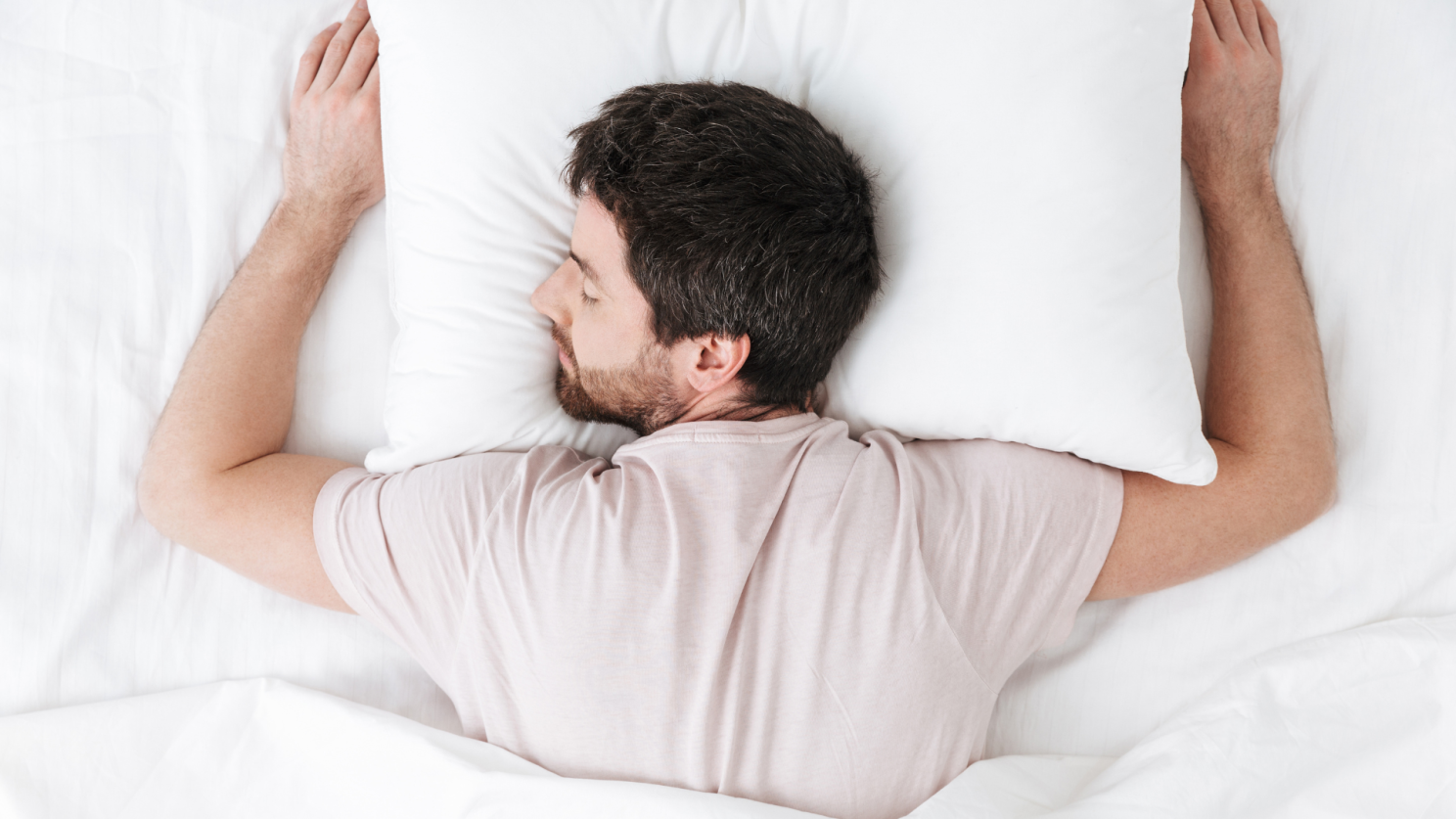
Recent studies have used objective measurement techniques to better understand how sleep posture affects morning symptoms. Research findings show that people experiencing morning neck symptoms spend significantly more time in what researchers classify as "problematic" sleep postures which are positions that place uneven or excessive loads on spinal tissues.
These individuals also changed positions more frequently during the night, likely attempting to relieve discomfort from sustained poor positioning. The research revealed that not all side sleeping is equal; sleeping on your side with your body properly aligned and supported puts much less stress on your spine than sleeping on your side in a twisted position with poor pillow support.
Comprehensive research reviews examining all available studies on sleep posture and spinal symptoms have found consistent patterns: side sleeping was generally better for preventing spinal symptoms, while certain positions (particularly prone sleeping) were associated with increased morning discomfort.
The most important insight from recent research is surprisingly simple: how well you maintain your chosen sleep position matters more than which specific position you choose. Good positioning in any orientation beats poor positioning, regardless of whether you're on your back or side.
For side sleepers, this means keeping your body in a straight line rather than twisting or curling up in asymmetrical ways (like having your top leg pulled far forward while your torso faces down). For back sleepers, it means ensuring your head, neck, and spine stay aligned with proper support. Timing also matters: staying in positions that stress your body for long periods (especially twisted or bent positions) can be more problematic than briefly passing through those same positions during normal sleep movement.
Your mattress plays a crucial role in supporting proper sleep posture, regardless of your preferred position. A mattress that's too soft can allow your body to sink unevenly, creating spinal misalignment, while one that's too firm may not accommodate your body's natural curves and pressure points. For back sleepers, medium-firm mattresses typically provide the best spinal support. Side sleepers often benefit from slightly softer surfaces that contour to the shoulders and hips while maintaining spinal alignment. Stomach sleepers (though this position isn't recommended) need firmer support to prevent excessive sinking at the midsection.
Your sleep posture doesn't just affect your musculoskeletal system; it influences overall sleep quality and as a result the way you feel the following day. Research consistently shows that people with optimal sleep postures report better sleep satisfaction, less tossing and turning throughout the night, improved rest and energy levels, and less morning stiffness. This creates a positive feedback loop where better posture leads to better sleep, which supports better recovery and daytime productivity.
Understanding sleep posture's importance is the first step, but implementing changes requires practical strategies. Start small by focusing on one adjustment at a time rather than overhauling your entire sleep setup. Invest in proper support through quality pillows that match your preferred position; this can make an immediate difference. Create consistency by trying to maintain similar positioning as you fall asleep each night, and be patient as your body adapts to new positions over several weeks.
Sleep represents one of the most fundamental aspects of human health, yet many people struggle to achieve the restorative sleep their bodies need. Understanding sleep posture offers a practical and accessible pathway to better sleep quality. By understanding the science behind different sleep positions and making informed choices about your nighttime setup, you're not just improving tonight's sleep but investing in better health and wellness for years to come!


More Info: At WellPro, we’re building a native AI platform purpose-built to scale the next era of care: personalized, preventative, and data-driven. Our thesis is simple but bold; the future of care delivery will be patient-centered, proactive, longitudinal, and closed-loop. That demands infrastructure that can ingest multi-modal health data, generate insight, drive action, and continuously optimize based on outcomes.
We believe Agentic AI is central to making this vision real. Not just chat interfaces or “co-pilots,” but deeply embedded, goal-driven AI agents that operate within the clinical system itself, helping surface insights at the point of care, automate routine tasks, and ensure closed-loop follow-through on interventions. This isn’t an AI layer on top of legacy systems. It’s a new foundation.
The assistant is still loading. Try again in a moment, or email hello@wellpro.ai.