← Go Back


Your body is constantly working to maintain internal balance: keeping inflammation in check, regulating pain signals, stabilizing mood, managing appetite, and coordinating sleep.
It's easy to assume these functions are handled independently by different systems. But there's a single regulatory network involved in all of them, and most people have never heard of it. It's called the endocannabinoid system. Discovered in the early 1990s, it's a fairly new system identified in human biology, which is why it's still rarely discussed outside of research settings. All that said, its role is anything but minor. The endocannabinoid system acts as a master balancing mechanism across your brain, immune system, gut, and nervous system. When it's working properly, it helps keep these systems calibrated. When it's disrupted through chronic stress, poor diet, sleep deprivation, or inactivity, the effects can cascade throughout your body affecting your mood, pain levels, sleep quality, appetite, inflammatory status, and more all simultaneously.
The endocannabinoid system has three core components: endocannabinoids (signaling molecules your body produces naturally), receptors (found on the surface of cells throughout your body), and enzymes (which break down endocannabinoids once they've done their job).
Your body produces two primary endocannabinoids: anandamide and 2-AG. Anandamide is often referred to as the "bliss molecule" because of its role in mood regulation, and it also influences pain perception, appetite, and memory. 2-AG is the more abundant of the two and plays a broad role in immune function, inflammation, and nervous system signaling.
These molecules interact with two main types of receptors. CB1 receptors are concentrated primarily in the brain and central nervous system and are involved in mood, memory, pain perception, appetite, and motor control. CB2 receptors are found mainly in the immune system and peripheral tissues and are involved in inflammation regulation and immune response.
When something in your body shifts out of balance, whether that's increased pain, rising inflammation, disrupted mood, or altered appetite, the endocannabinoid system responds by producing endocannabinoids that bind to the appropriate receptors to help restore equilibrium. Once balance is restored, enzymes break the endocannabinoids down so the signal doesn't overshoot. This makes the endocannabinoid system fundamentally different from many other biological systems. It's not always running at a fixed level. It activates on demand, responds to what your body needs in the moment, and then resets. This is why it's considered one of the body's primary homeostatic regulators.
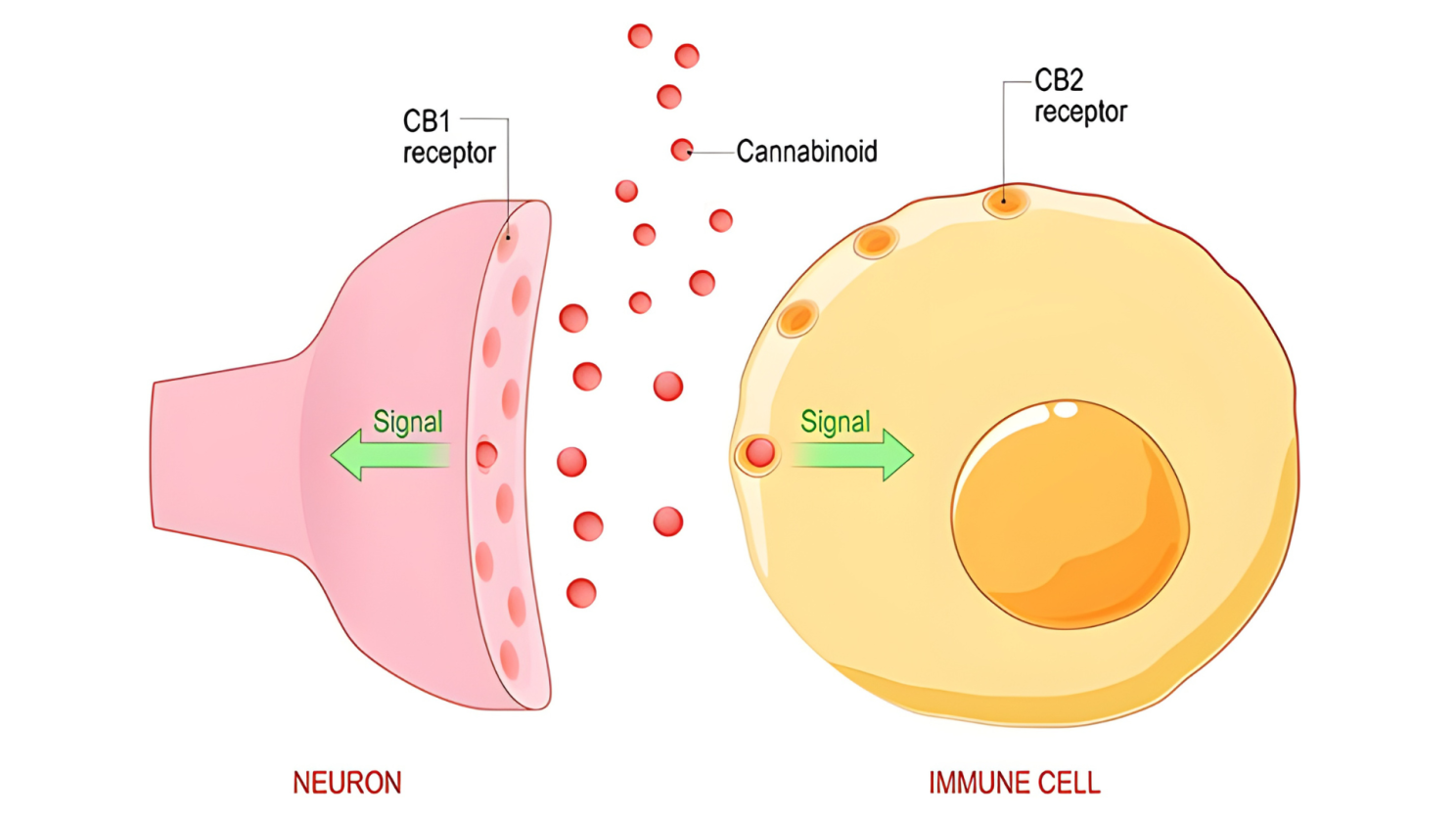
Pain Regulation: The endocannabinoid system plays a significant role in how your body processes and modulates pain. Endocannabinoids can help dampen pain signals at both the site of injury (through CB2 receptors on immune cells) and in the brain (through CB1 receptors in pain-processing regions). In short, when the system is functioning well, it helps keep pain proportionate to the actual level of tissue damage. When it's impaired, pain sensitivity can increase and pain signals may persist even after the original cause has resolved.
Mood and Stress Response: Anandamide (one of the two primary endocannabinoids your body produces, often called the "bliss molecule" due to its role in mood and emotional balance) plays an important role in emotional regulation and stress resilience. It interacts with brain regions involved in anxiety, fear, and reward processing. Research has found that people with higher circulating anandamide levels tend to report lower anxiety and greater emotional stability. The endocannabinoid system also helps regulate the stress response by modulating the HPA axis (the system that controls cortisol production), essentially helping your body return to calm after a stressful event rather than staying in a heightened state of fight or flight.

Sleep: The endocannabinoid system follows its own circadian rhythm, with endocannabinoid levels fluctuating throughout the day. These fluctuations appear to help regulate sleep-wake transitions and sleep quality. Research suggests that endocannabinoid signaling may promote the onset of sleep and support deeper and more restorative sleep stages. However, disrupted endocannabinoid function has been associated with difficulty falling asleep, fragmented sleep, and poor sleep quality.
Appetite and Metabolism: The endocannabinoid system helps regulate hunger and satiety signals as well as how your body processes and stores energy. It influences when you feel hungry, when you feel satisfied, and how efficiently your metabolism operates. When the system is balanced, appetite tends to self-regulate naturally. When it's overactive or underactive, it can contribute to either excessive hunger or loss of appetite.
Immune Function and Inflammation: Through CB2 receptors on immune cells, the endocannabinoid system plays a direct role in modulating inflammatory responses. It helps ensure that inflammation is proportionate to the actual threat, activated when needed and resolved when the threat has passed. When endocannabinoid signaling is impaired, inflammatory responses may become excessive or chronic, contributing to the kind of persistent low-grade inflammation that has been linked to numerous health conditions.
Gut Health: Endocannabinoid receptors are abundant throughout the digestive tract, where they help regulate gut motility, intestinal inflammation, and the gut-brain communication that influences both digestive function and mood. Emerging research suggests that the endocannabinoid system may also interact with the gut microbiome, with each influencing the other in ways that are still being explored.
Chronic Stress: Sustained stress is a significant disruptor of endocannabinoid function. Chronic cortisol elevation can reduce endocannabinoid levels and impair receptor sensitivity. Over time, this diminishes the system's ability to help you recover from stress, creating a cycle where stress depletes the very system designed to help you manage it.
Sedentary Lifestyle: Physical inactivity is associated with lower endocannabinoid levels. Without regular movement, particularly sustained moderate-intensity exercise, the system doesn't receive the stimulus it needs to maintain healthy signaling.
Poor Diet: Diets high in processed foods and excessive omega-6 fatty acids (common in seed oils and processed snacks) relative to omega-3 fatty acids can impair endocannabinoid receptor function. The endocannabinoid system depends on dietary fatty acids as raw materials for producing endocannabinoids, so the quality of fat in your diet directly influences the system's ability to function.

Sleep Deprivation: Poor sleep disrupts the circadian rhythm of endocannabinoid production, reducing levels when they should be elevated and altering the system's ability to support restorative processes during sleep.
Chronic Inflammation: Persistent inflammation can desensitize endocannabinoid receptors over time, reducing the system's ability to modulate inflammatory responses effectively. This creates another feedback loop where inflammation impairs the system designed to resolve it.
Regular Aerobic Exercise: Sustained moderate-intensity exercise is one of the most reliable ways to increase endocannabinoid levels. Activities like running, cycling, swimming, and brisk walking at a moderate pace for 30 or more minutes have been shown to elevate circulating endocannabinoids. This is one of the key mechanisms behind the mood-boosting, pain-reducing, and stress-relieving effects of exercise.

Omega-3 Fatty Acids: Omega-3s serve as essential building blocks for endocannabinoid production. Including regular sources of omega-3s in your diet (fatty fish like salmon, sardines, and mackerel, as well as walnuts, flaxseeds, and chia seeds) supports the raw material your body needs to synthesize endocannabinoids effectively.
Quality Sleep: Since endocannabinoid levels follow a circadian pattern, consistent and restorative sleep helps maintain healthy cycling of the system. Prioritizing sleep consistency and quality supports the natural rhythm of endocannabinoid production.
Stress Management: Because chronic stress directly depletes endocannabinoid levels, practices that help regulate your stress response also support endocannabinoid function. Breathwork, meditation, time in nature, and meaningful social connection can all help protect the system by keeping cortisol in check.
Diet Quality: Reducing processed food intake and balancing your omega-6 to omega-3 ratio supports receptor function and provides the fatty acid building blocks the system depends on. Polyphenol-rich foods like dark chocolate, berries, and green tea may also support endocannabinoid receptor health.
Social Connection and Physical Touch: Positive social interactions and physical touch have been associated with increased endocannabinoid levels. Meaningful connection appears to activate the system in ways that support mood, reduce stress, and promote overall wellbeing. Physical touch in particular, whether through a hug, a handshake, or physical closeness with someone you trust, may stimulate endocannabinoid release in ways that reinforce feelings of safety and connection.
The endocannabinoid system is an incredibly important regulatory network in your body, and one of the least talked about. It connects pain, mood, sleep, appetite, inflammation, immune function, and gut health through a single signaling system that's constantly working to keep everything in balance.
What makes it especially relevant is that it responds directly to how you live. The habits that support endocannabinoid function, regular exercise, quality sleep, omega-3 intake, stress management, and a whole-food diet, are the same habits that support virtually every other system in your body. The endocannabinoid system may be one of the key reasons why these foundational habits work as broadly as they do.
Your body already has the machinery for balance. Supporting the endocannabinoid system is about giving it the conditions it needs to do what it was designed to do!

The assistant is still loading. Try again in a moment, or email hello@wellpro.ai.