← Go Back


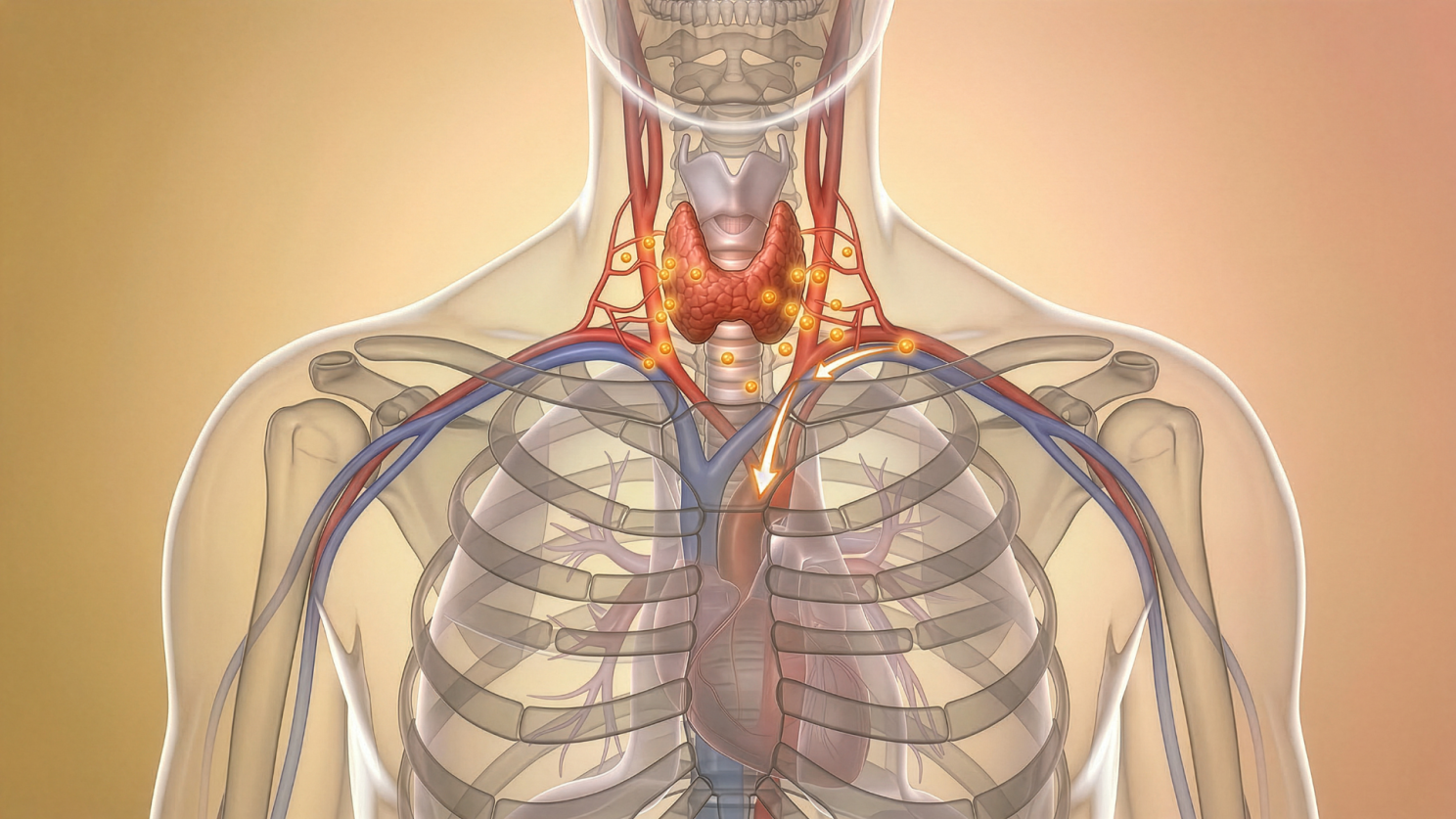
Right at the front of your neck, just below your Adam's apple, sits a small, butterfly-shaped gland that plays an incredibly important role in how you feel each day. It's called your thyroid, and its job is to set the pace of nearly everything happening inside you. It helps determine how fast your heart beats, how efficiently you burn energy, how warm you feel, and even your mood. When it's working well, you rarely think about it. But when it runs even slightly too fast or too slow, the effects can ripple through your entire body in ways that are easy to misread as stress, aging, or just feeling off. Some very common health complaints, persistent fatigue, unexplained weight changes, low mood, brain fog, and feeling cold all the time, can often trace back to a thyroid that has drifted out of range. What makes this gland especially worth understanding is that its problems are common, often subtle, and can be missed. Learning how it works, and what can throw it off, is a genuinely useful thing to understand about your own health.
The thyroid produces hormones that act like a throttle for your metabolism, which is the sum of all the chemical processes that keep you alive and functioning. It makes two main hormones, and their names are less important than what they do. The thyroid mostly releases a storage form of the hormone, which your body then converts into the active form that actually does the work. That active hormone travels through your bloodstream and tells your cells how quickly to run.
This influence is remarkably broad. Thyroid hormones affect your heart rate, your body temperature, and how efficiently you burn calories. They also influence your digestion, your skin and hair, your mood, and how quickly your brain processes information. Almost no system is untouched, which is why thyroid problems can produce such a wide and sometimes confusing range of symptoms.
The whole system is governed by a feedback loop involving the brain. A region called the pituitary gland monitors the level of thyroid hormone in your blood and releases something called TSH (thyroid-stimulating hormone) to tell the thyroid to make more or less. When thyroid hormone is low, TSH rises to push the gland harder. When it's high, TSH falls. This is why TSH is usually the first thing measured on a blood test, because it reflects how hard your body is having to work to keep thyroid levels where they should be.
The most common form of thyroid dysfunction is an underactive thyroid, or hypothyroidism, where the gland doesn't produce enough hormone. When this happens, the body's pace slows down, and the symptoms tend to reflect that generalized slowing.
Common signs include persistent fatigue, weight gain or difficulty losing weight, feeling cold when others are comfortable, dry skin, thinning hair, constipation, low mood, and a kind of mental sluggishness often described as brain fog. Because these symptoms come on gradually and overlap with so many other things, people often live with them for a long time, assuming they're just tired, stressed, or getting older.
The most common cause of hypothyroidism in much of the world is an autoimmune condition called Hashimoto's thyroiditis, in which the immune system gradually attacks the thyroid. Globally, iodine deficiency is another major cause, since iodine is an essential building block of thyroid hormone.
There's also a milder, earlier stage called subclinical hypothyroidism, where TSH is elevated but thyroid hormone levels are still technically normal. It's quite common, becomes more frequent with age, and is more prevalent in women. Whether it should be treated is genuinely debated among doctors, and often depends on the specific numbers, symptoms, and other risk factors. It's one reason a doctor may choose to monitor and recheck rather than treat immediately.
Less common but also important is an overactive thyroid, or hyperthyroidism, where the gland produces too much hormone. Here, the body's pace speeds up, and the symptoms tend to mirror that acceleration.
These can include a racing or irregular heartbeat, unexplained weight loss, anxiety or restlessness, difficulty sleeping, feeling too warm and sweating easily, tremor in the hands, and irritability. One of the more common causes is an autoimmune condition called Graves' disease. Because a persistently racing heart carries real risks, hyperthyroidism generally needs prompt medical attention.
Part of what makes the thyroid worth understanding is how easily its dysfunction hides. The symptoms of both an underactive and an overactive thyroid overlap heavily with everyday experiences and other conditions. Fatigue, weight change, and mood shifts get attributed to stress, diet, sleep, or aging. The onset is usually gradual, so people adapt to feeling progressively worse without a clear moment of "something is wrong."
This is compounded by the fact that thyroid dysfunction is more common than many people realize, especially in women and with advancing age. The combination of common, subtle, and easily misattributed means a fair number of people go undiagnosed for a long time. This is exactly why awareness matters. Knowing the symptom patterns is often what prompts someone to get a simple blood test that finally explains how they've been feeling.
Before the practical part, an honest and important caveat: if you suspect a thyroid problem, the most valuable action is not a supplement, it's getting properly evaluated. Real thyroid disease is diagnosed with blood tests and managed by a physician, and no amount of lifestyle optimization replaces that. With that firmly in mind, there are legitimate ways to support healthy thyroid function.
Get adequate but not excessive iodine. Iodine is essential for making thyroid hormone, and deficiency is a real cause of thyroid problems. But this is a case where more is not better. Too much iodine can actually trigger or worsen thyroid dysfunction. For most people eating a varied diet with iodized salt, seafood, or dairy, intake is adequate, and megadose iodine supplements are a genuine risk rather than a smart hedge.

Ensure enough selenium. Selenium is a trace mineral your body needs in small amounts, and it plays a role in thyroid hormone metabolism and in the antioxidant defenses of the gland. Some research suggests selenium may modestly reduce thyroid antibodies in autoimmune thyroiditis, though the evidence is mixed and the certainty is low, so it's best viewed as supportive rather than curative. Selenium can come from foods like seafood, eggs, seeds, and Brazil nuts, though Brazil nuts are very selenium-rich, so they don't need to be overdone.
Don't overlook other nutrients. Iron, zinc, and vitamin D each play supporting roles in thyroid health, which is one more reason a generally nutrient-dense diet matters.
Manage stress and prioritize sleep. Chronic stress and poor sleep don't typically cause thyroid disease on their own, but they influence the broader hormonal environment the thyroid operates in, and they can worsen how you feel when thyroid function is already off.
Be aware of your risk factors. A family history of thyroid or autoimmune disease, being female, increasing age, pregnancy, and certain medications all raise the odds of thyroid issues. If any of these apply and you have symptoms, it's worth mentioning to your doctor and asking whether a thyroid panel makes sense.
Know which tests exist. A basic screen usually starts with TSH, but a fuller picture may include free T4, thyroid antibodies, and in some cases free T3. If your symptoms are strong but a single TSH looks normal, it can be reasonable to discuss more complete testing with your doctor.
The thyroid is a striking example of how something small and easily ignored can quietly shape your entire experience of daily life. It sets the tempo for your energy, your weight, your mood, your temperature, and your mental clarity. When it drifts out of range, those effects can be far-reaching, which is exactly why this small gland deserves more attention than it usually gets.
The encouraging part is that thyroid problems are highly identifiable and, in most cases, very treatable once they're found. The challenge is simply recognizing them, which is where understanding this gland pays off. If you've been struggling with unexplained fatigue, weight changes, mood shifts, or that persistent sense of running at the wrong speed, your thyroid is one of the more worthwhile things to have checked!


The assistant is still loading. Try again in a moment, or email hello@wellpro.ai.