← Go Back


Stand on one leg and close your eyes. Within a few seconds, most people begin to sway. That wobble reveals just how much your body relies on your vestibular system, a little-known balance network tucked deep inside your inner ear. Most of us never think about balance until it starts to slip, and that tends to happen gradually with age. But here's what most people don't realize. The vestibular system isn't just about staying upright. It's deeply connected to how you form spatial memories, how you navigate the world, and even how anxious or grounded you feel. It also happens to be something you can train, at any age. Understanding it turns balance from something that quietly declines into something you can actively protect.
Deep inside each of your ears, past the structures responsible for hearing, sits a set of tiny fluid-filled chambers that make up your vestibular system. It has two main parts. The semicircular canals, three looping tubes set at different angles, detect rotation, like when you shake or turn your head. The otolith organs detect linear movement and the pull of gravity, telling your brain whether you're speeding up, slowing down, or tilting.
Here's how it works. When your head moves, the fluid inside these structures shifts and bends tiny hair cells, which convert that motion into electrical signals. Those signals travel to your brain, which uses them to understand your head's position and movement in space. It happens continuously, thousands of times a day.
Importantly, the vestibular system doesn't work alone. Your sense of balance is really a collaboration between three inputs: your vestibular system, your vision, and proprioception (the sense of where your body is, coming from receptors in your muscles and joints). Your brain constantly blends these three streams. This is why balance gets harder in the dark, when vision drops out, or on an unstable surface, when proprioception is challenged. Take away one input and the other two have to work harder.
For a long time, the vestibular system was viewed narrowly, as little more than an internal level that kept you from tipping over. That view has expanded considerably. Researchers now understand that vestibular signals travel to a surprising range of brain regions, including areas central to memory, navigation, and emotion.
One of the most striking connections is with the hippocampus, a brain region essential for memory and spatial navigation. The hippocampus contains specialized cells that help you build mental maps of your surroundings, and vestibular input appears to be important for keeping those maps accurate. When your sense of movement and head position feeds into this system correctly, your brain can track where you are and where you've been.
The research here is genuinely interesting, though it's worth being careful about what it does and doesn't show. People with significant vestibular loss have been found to experience more difficulty with spatial memory and navigation, and in some cases show changes in the hippocampus itself. This has led researchers to describe the vestibular system as a window into brain function well beyond balance. That said, much of this evidence comes from people with diagnosed vestibular disorders, and the relationships appear to be associational rather than proof that ordinary, everyday changes in balance will harm your memory. What's clear is that the anatomical links are real, and they suggest the vestibular system plays a broader role in the brain than simply keeping you upright.
Perhaps the most surprising connection is emotional. There appears to be a meaningful relationship between vestibular function and anxiety, and it seems to run in both directions.
Vestibular pathways connect to brain regions involved in processing threat and emotion, including the amygdala. When your sense of physical stability is disrupted, it can produce a feeling of unease that closely resembles anxiety, and that connection appears to be built into the wiring. Anyone who has felt the low-grade dread that comes with persistent dizziness has experienced this firsthand.
The relationship seems to run the other way too. Anxiety can heighten and prolong dizziness, sometimes creating a self-reinforcing loop where unsteadiness feeds worry and worry feeds unsteadiness. Research has generally found that people with vestibular problems report higher rates of anxiety and low mood than those without. As with the cognitive links, most of this evidence comes from people with clinical vestibular problems, so it shouldn't be overstated for the average person. But it points to something worth appreciating: your sense of physical groundedness and your sense of emotional groundedness are more connected than they appear.
Like most systems in the body, the vestibular system tends to weaken over time. The hair cells in the inner ear that detect motion gradually decline in number and sensitivity, and the signals they send can become less reliable. At the same time, the other two contributors to balance often weaken too. Vision changes with age, and proprioception tends to dull. So balance can become a system losing support on all three fronts at once.
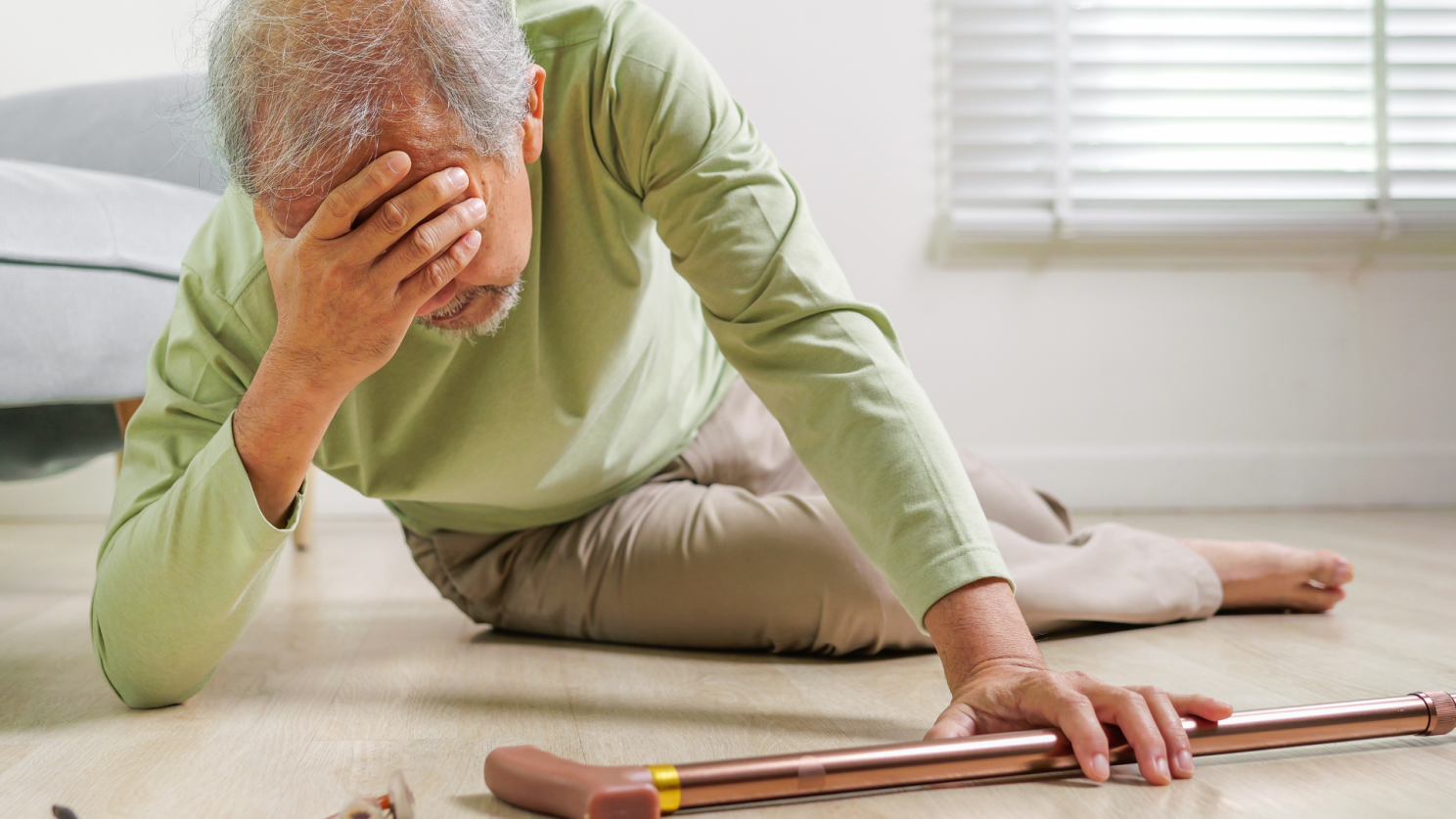
This is why unsteadiness so often creeps in during the second half of life, and why it matters so much. Falls are among the leading causes of serious injury in older adults, and there's often a second cost: after a fall, people frequently move less to avoid another one, and lose strength and balance as a result.
The encouraging part is that decline is not simply something that happens to you. The vestibular system and the broader balance network respond to training throughout life.
Balance behaves like a trainable skill. Challenge it regularly and it improves. Neglect it and it starts to fade. The evidence that balance training reduces falls in older adults is strong and consistent, which makes this one of the more clearly actionable areas in all of health. A few principles help.
Challenge your balance on purpose. The key is to work at the edge of your stability, safely. That means putting yourself in positions where you have to actively balance rather than simply standing comfortably. The programs that genuinely challenge balance tend to be the ones that help most.
Start with the basics. Standing on one leg is the classic starting point. Build up to holding it for 30 seconds per side. When that becomes easy, progress it.
Remove vision to challenge your balance more directly. Closing your eyes during balance work removes visual backup, which forces your vestibular system and proprioception to do the job on their own. Note: do this near a wall or sturdy surface you can grab.
Add movement and instability. Rotational movements, walking heel-to-toe, changing direction, and training on less stable surfaces all raise the challenge. Practices like tai chi and yoga are well supported for balance and combine movement, coordination, and stability beautifully.
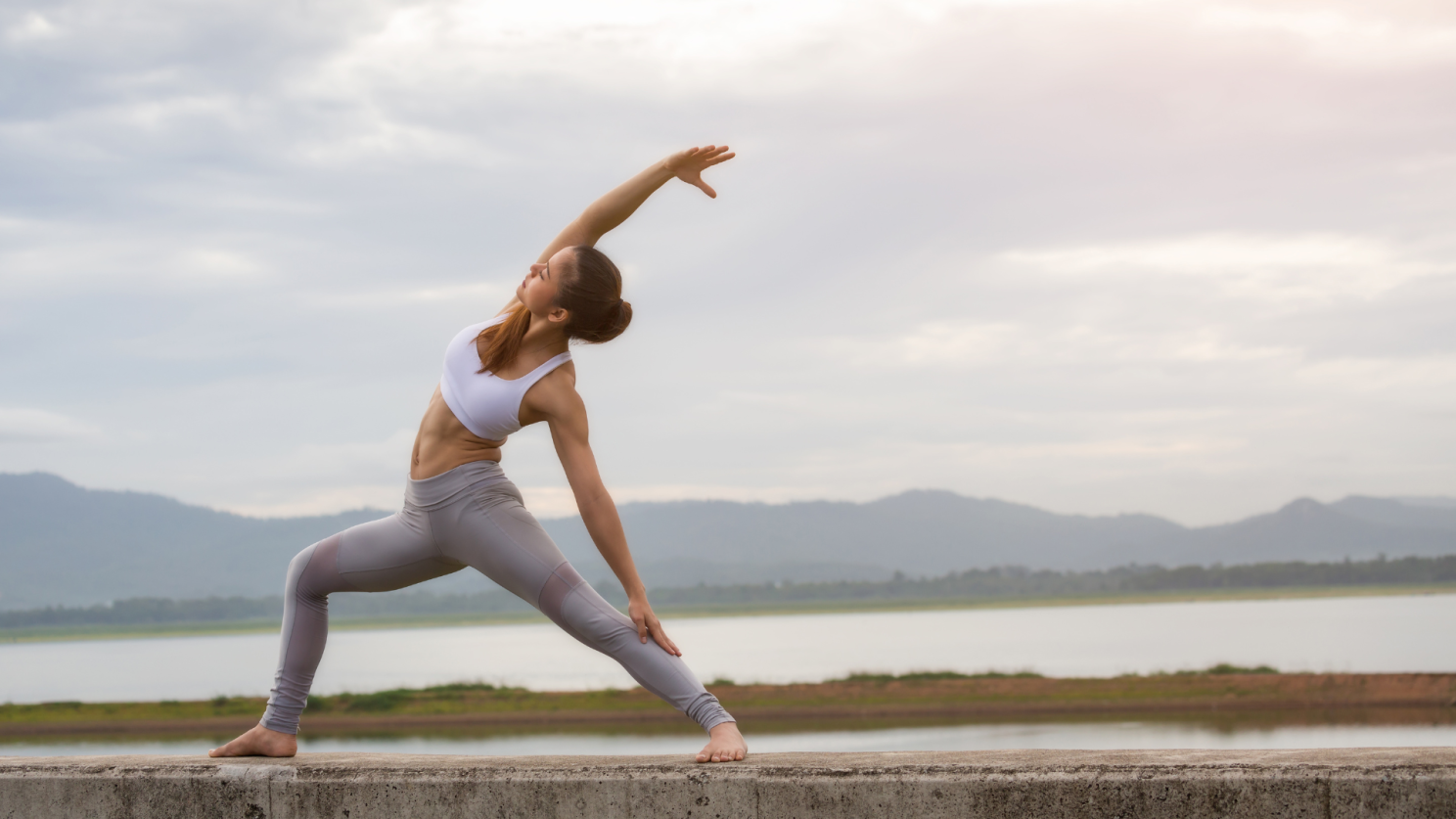
This isn't just for older adults. Athletes and active people benefit too. Better balance means better coordination, quicker reactions, more efficient movement, and often improved performance and injury resistance. It's easier to build and maintain the system now than to rebuild it later.
The vestibular system is one of the clearest examples of how something quiet and unnoticed can shape a great deal of your experience. It keeps you upright, yes, but it also helps you navigate the world, form spatial memories, and feel physically and emotionally grounded. It runs thousands of times a day, and most people never give it a moment's thought until it falters.
That's exactly why it's worth paying attention to now. Balance isn't a fixed trait that quietly erodes with age. It's a capacity you can train, and the same simple habits that steady you on your feet may also support how clearly you think and how grounded you feel for years to come!

The assistant is still loading. Try again in a moment, or email hello@wellpro.ai.