← Go Back


Your body has a limit to how much oxygen it can use. Push yourself during intense exercise and you'll eventually hit a ceiling where breathing harder doesn't help anymore. Why? Your body has reached its maximum oxygen utilization. This limit is called VO2 max, and most people think it's just a measure of how fit you are. It's actually measuring something far more fundamental: how well your cells produce energy.
VO2 max stands for maximal oxygen consumption, expressed as milliliters of oxygen used per kilogram of body weight per minute. It's typically framed as an athlete's metric and a measurement of cardio fitness or endurance capacity.
But what it's actually capturing is the integrated capacity of your cardiovascular system, muscles, and mitochondria to deliver and use oxygen. The term makes it sound like a lung or cardiovascular measurement alone, but VO2 max reflects the coordinated function of your heart, lungs, blood vessels, muscle tissue, and the mitochondria within those muscles.
Your mitochondria are the organelles (specialized structures inside cells that perform specific functions, like tiny organs within each cell) inside your cells that use oxygen to generate ATP (adenosine triphosphate: the energy currency that powers everything your body does, from muscle contractions to brain activity). Higher VO2 max is generally associated with greater mitochondrial capacity and efficiency in trained muscle, along with better oxygen delivery from your cardiovascular system.
This is why cardiorespiratory fitness (your body's ability to supply oxygen to muscles during sustained physical activity), often quantified by VO2 max or related measures, is one of the strongest predictors of all-cause mortality and healthspan. In many studies, it has been shown to rival risk markers like blood pressure, and cholesterol in predicting long-term health outcomes. It's not measuring just one organ system. It reflects the integrated function of your heart, lungs, blood vessels, and metabolically active tissues, making it a powerful window into the body's overall health.
Low VO2 max is associated with poorer mitochondrial and metabolic health and with higher risk of earlier morbidity and mortality, which is why it's often discussed as a marker of biological aging.
High VO2 max indicates resilient, efficient cells and cardiovascular systems that can meet energy demands.
Understanding VO2 max reveals why improving it isn't just about fitness but about optimizing the fundamental biology that determines how long and how well you live.
When you exercise, your body needs to produce more ATP (the molecule your cells use as fuel) to power muscle contractions. Your cells generate ATP primarily through a process called cellular respiration, which uses oxygen to break down nutrients and convert them into usable energy. As exercise intensity increases, your oxygen consumption increases until you reach a point where oxygen consumption plateaus despite increasing your effort. That plateau is your VO2 max.
Three systems determine your VO2 max: your cardiovascular system's ability to deliver oxygen-rich blood to tissues, your muscles' capacity to extract oxygen from blood, and your mitochondria's ability to use that oxygen to produce ATP. Your heart pumps oxygenated blood. Your blood carries it to working muscles. Your muscle cells extract oxygen from blood. Your mitochondria use that oxygen through oxidative phosphorylation (the process of using oxygen to create energy inside mitochondria).
The bottleneck can occur at any point in this chain. In many people, the main limitation is the heart's ability to deliver oxygen-rich blood, while in others it is peripheral factors such as muscle efficiency and how well mitochondria function within muscle cells. This is why VO2 max is often used as a global marker of cardiorespiratory and metabolic fitness that is strongly influenced by mitochondrial function. More mitochondria means more sites for ATP production. Higher mitochondrial density and function, combined with better cardiovascular capacity, directly translates to higher VO2 max.
Numerous large-scale studies have shown that VO2 max is a very strong predictor of all-cause mortality (death from any cause). Research has found that cardiovascular fitness measured by VO2 max may be as strong or stronger a predictor of mortality than traditional risk factors like hypertension (high blood pressure), high cholesterol, diabetes, and smoking, though the exact relationships can vary across different populations and study designs.
The mechanism behind this relationship involves mitochondrial and metabolic health. Mitochondria don't just produce energy. They regulate cellular stress responses, control apoptosis (programmed cell death), manage calcium signaling (how cells communicate internally), and produce reactive oxygen species that function as cellular signals. When mitochondrial function declines, cells lose their ability to produce adequate energy, respond to stress, and maintain homeostasis (the body's ability to maintain stable internal conditions).
Low VO2 max indicates systemic decline in both cardiovascular capacity and mitochondrial function. When your cells struggle to use oxygen efficiently, it signals that mitochondria across your body are becoming less functional and that oxygen delivery systems may be compromised. This affects every tissue: your heart has less contractile reserve (ability to pump harder when needed), your brain has less energy for neural activity, your muscles fatigue more easily, and your metabolic tissues become less responsive to insulin (the hormone that regulates blood sugar).
This is why VO2 max may predict not just cardiovascular disease but also metabolic disease, cognitive decline, and overall mortality. It's measuring the fundamental cardiovascular and metabolic capacity that underlies health across all systems.
Your brain represents about 2% of your body weight but consumes roughly 20% of your oxygen at rest. Neurons (brain cells) require constant ATP production to maintain membrane potentials (the electrical charges that allow neurons to fire), synthesize neurotransmitters (chemical messengers that allow brain cells to communicate), and support synaptic activity (the connections between neurons). This energy demand makes your brain particularly vulnerable to mitochondrial dysfunction.
Research has shown associations between higher VO2 max and better cognitive function, larger brain volume, and lower dementia risk. Some studies suggest that people with higher cardiovascular fitness in midlife may have lower rates of dementia decades later. The connection appears straightforward: better oxygen delivery and utilization means your brain cells have the energy they need to function optimally.
Aerobic exercise that improves fitness and VO2 max has also been shown to stimulate the production of brain-derived neurotrophic factor (BDNF, a protein that supports neuron survival and promotes the growth of new neurons). Higher VO2 max has been associated with increased volume in the hippocampus (the brain region critical for memory formation). Research indicates that exercise programs designed to increase VO2 max may also improve cognitive performance and brain health in older adults. This suggests that maintaining cardiovascular fitness and mitochondrial capacity through physical activity could support long-term brain function.
In sedentary individuals, VO2 max has been shown to decline approximately 10% per decade after age 30. By age 70, a sedentary person might have half the VO2 max they had at age 30. This decline isn't inevitable and is driven by physiological changes that are largely preventable through training.
Several factors contribute to age-related VO2 max decline:
Each of these changes is accelerated by inactivity and slowed by training. People who maintain high levels of physical activity throughout life experience much smaller declines in VO2 max. The decline is not purely a function of aging but a function of declining physical activity and reduced stimulus to maintain cardiovascular and mitochondrial function.
VO2 max is highly trainable at any age. Even individuals in their 60s and 70s can increase VO2 max by measurable amounts with proper training. Two types of training are particularly effective: high-intensity interval training (HIIT) and sustained moderate-intensity exercise (Zone 2 training).
High-intensity interval training involves short bursts of exercise at or near maximum effort followed by recovery periods. HIIT is extremely effective at increasing VO2 max because it places maximum demand on your cardiovascular system and mitochondria. The high intensity forces your body to adapt by increasing mitochondrial density, improving oxygen delivery, and enhancing the efficiency of oxidative phosphorylation (the process by which mitochondria convert oxygen and nutrients into ATP, your cells' usable energy). HIIT sessions can be short (20-30 minutes) but require genuine high effort during work intervals.
Zone 2 training involves sustained exercise at a moderate intensity where you can still hold a conversation but are working hard enough that you wouldn't want to. This training zone targets mitochondrial efficiency and fat oxidation (your body's ability to burn fat for fuel). Zone 2 work increases mitochondrial density, improves capillary networks in muscles, and enhances your muscles' ability to extract and use oxygen. While Zone 2 training requires longer duration (45-90 minutes), it's more sustainable and creates less stress on the body than HIIT.
The most effective approach combines both: 3-4 sessions per week of Zone 2 training combined with 1-2 sessions of HIIT can produce significant improvements in VO2 max. Resistance training also contributes indirectly by maintaining muscle mass, which preserves the total mitochondrial capacity in your body.
Note: Always consult with your healthcare provider if you have cardiovascular or metabolic conditions.

True VO2 max testing requires laboratory equipment and involves exercising to exhaustion on a treadmill or bike while wearing a mask that measures oxygen consumption and carbon dioxide production. This gold-standard test is accurate but not practical for most people.
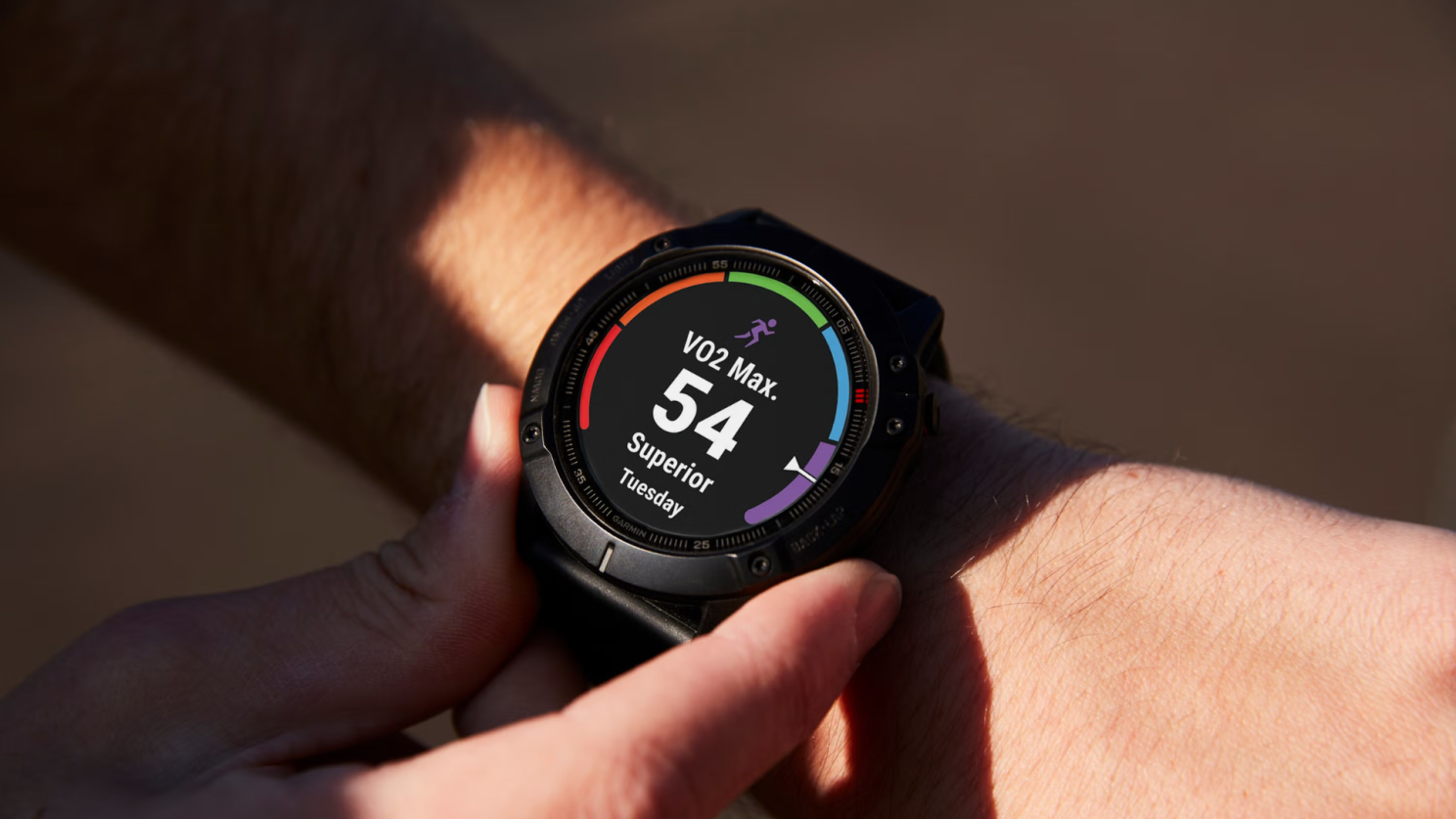
Many fitness wearables now estimate VO2 max using algorithms that incorporate heart rate data, pace, and other metrics during exercise. Apple Watch, Garmin, Whoop, and others all provide VO2 max estimates. While these estimates may be off on the exact number, they're usually consistent enough to track general trends over time.
The specific number matters less than the trend. What's more important is whether your VO2 max is increasing or decreasing over time. Tracking changes provides feedback on whether your training is effective and whether you're maintaining or improving your cardiovascular and mitochondrial capacity.
VO2 max is sometimes dismissed as a metric only relevant for endurance athletes or fitness enthusiasts. This misses the point entirely. VO2 max is a measure of fundamental cardiovascular and metabolic function. It reflects whether your oxygen delivery systems and mitochondria are abundant and efficient or declining and struggling.
You don't need to be an athlete to benefit from improving your VO2 max. Every system in your body depends on ATP production. Improving VO2 max isn't about performance. It's about maintaining the cardiovascular and mitochondrial function that determines healthspan (the number of years you live in good health). You need healthy mitochondria and efficient oxygen delivery to walk up stairs without getting winded, to maintain cognitive function as you age, to resist metabolic disease, and to preserve independence well into your later years.

The assistant is still loading. Try again in a moment, or email hello@wellpro.ai.